I am descended from Joseph Schwegler of Switzerland. He was my great-great-grandfather on my mother’s side of the family. Schwegler is a derivative of the Middle High German word swegele meaning pipe or flute or the nickname for someone who plays a flute.[1]
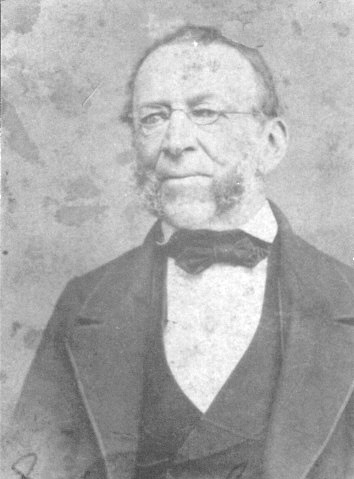
Joseph was born in Switzerland about 1829. He immigrated with his family to the United States. He came with his wife Anna and his sons Julius and Franz. Franz’s name was later changed to Frank. Julius was four and Franz was one. In the last days of his life, Julius told family members that Anna was not his mother. Also included with the family were traveling companions, Peter Schwegler and Catherine Graninger.
The family traveled steerage on the SS Hansa, from Wohlhausen, modern-day Wulhusen, to the U.S. Wolhusen is located about thirteen and a half miles west of Lucerne, the capital of Canton Lucerne, Switzerland. In 1863 the trip would have probably taken four to six weeks to cross the Atlantic Ocean. They arrived in the city of New York on 20 Jul 1863. I often wonder who he left behind. Did he watch their faces as he left the town? Did he shed a tear for the family and country he would never see again? No doubt he had high hopes for his new life in America.
The family went immediately from New York to Centralia, Illinois. Most likely family or friend connections in the community drew them to the area. The third son, Joseph, was born there in 1864. There are two hypotheses as to why the family did not stay in the area, one being Joseph was too poor to buy oxen needed to plow the sod, as that area of Illinois was part of the vast American prairie. The second being Anna passed away shortly after the birth of Joseph.
From Centralia, the family moved about one hundred and fifty miles west to Gasconade County, Missouri. Peter Schwegler stayed behind because he volunteered to be a “substitute” to fight in the Civil War for a prominent citizen of Centralia. Joseph and Peter could have been brothers. Unfortunately, we don’t know what their relationship was.
Joseph worked as a farmhand for a wealthy widow named Anna Fehner Kallewyne. Other records show her last name as Kalteweihr. Joseph soon married Anna on 22 Mar 1867. From this union came two more sons, Hann and Benjamin. Hann either died at birth or shortly thereafter. Benjamin was born in 1868.
While the marriage record shows that Joseph and Anna were married in 1867, a land record dated 4 Oct 1866 shows that the two were married and signed a promissory note to pay Diedrich Weidemann one thousand dollars for a piece of land in township forty-three, range six west in Gasconade County. The land contained two hundred acres (more or less). The promissory note was due four years from the date signed. Anna made good on the note on 5 Oct 1871.
A few months later, on 15 Oct 1867, Joseph appeared before the Clerk of the Circuit Court of Gasconade County to swear upon his oath his intention to become a citizen of the United States and denounce his allegiance to the Republic of Switzerland.
Joseph’s dreams of a new life in America ended on 28 Feb 1870 when he died at forty-one. He had only been in the country for six and a half years. He is buried in the Schwegler-Myers cemetery, a little cemetery located on the border of Gasconade and Osage Counties. Anna Schwegler became the curator of his estate and guardian for my great-grandfather Julius.
I am indebted to my second cousin, Bill Schwegler. While I have many documents supporting the events of Joseph’s life, it is the stories handed down from my great-grandfather Julius at the end of his life to Bill’s mother adding to the humanness of Joseph. And Bill graciously shared those stories and pictures with me.
[1] Ancestry.com, Schwegler Family History (http://www.ancestry.com) : accessed 15 Jan 2016), Citing Dictionary of American Family Names, ©2013, Oxford University Press
 Gathering Leaves for My Family Tree